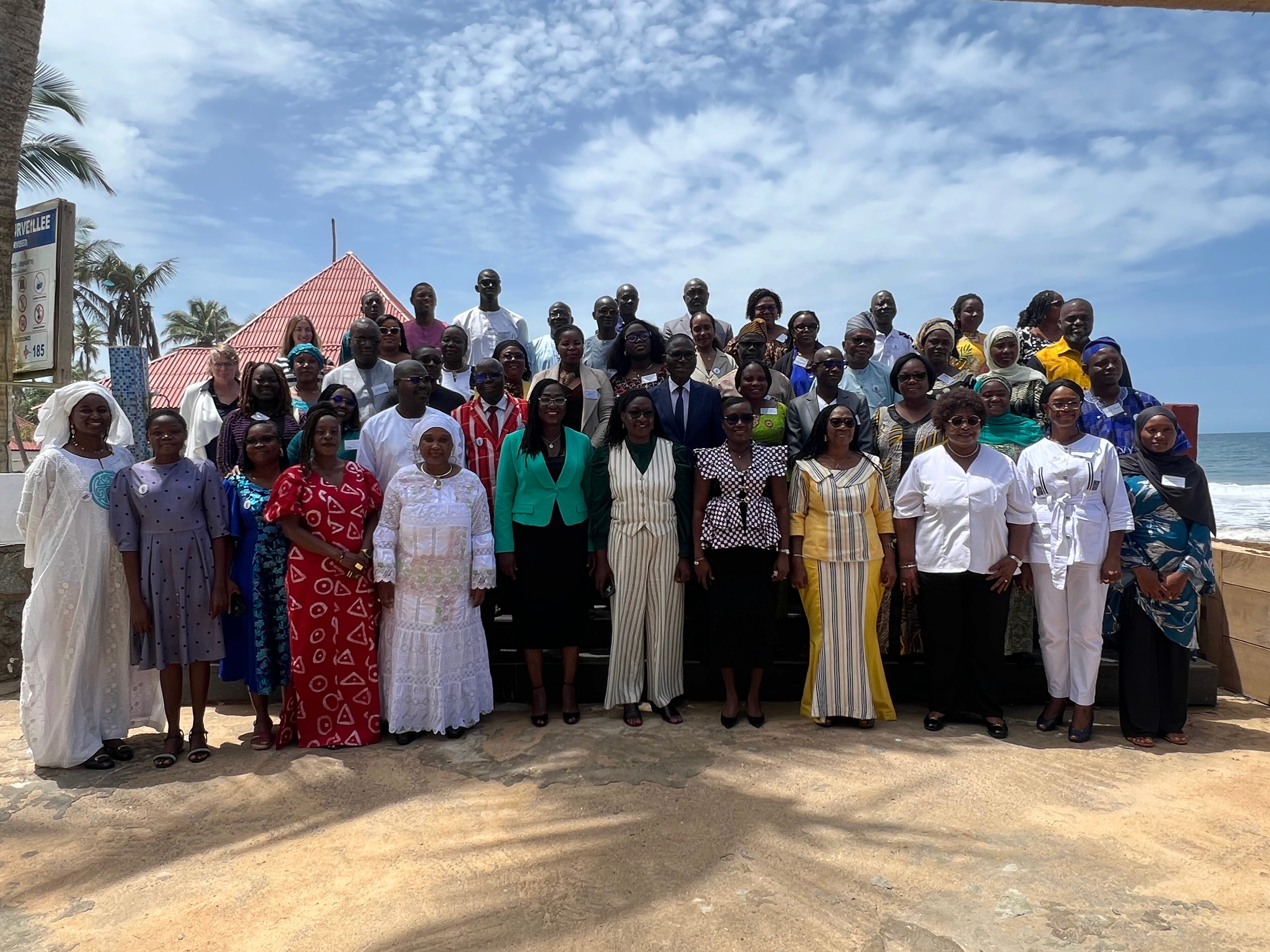
Education & Child Marriage Regional Strategy — West & Central Africa
Advocacy
March 2025 - December 2025
Transformative regional roadmap to make education the central lever for the protection of girls against early marriage.

Research
May 2024


In Senegal, the phenomenon of talibé child begging has long been addressed through legal and punitive frameworks that fail to account for the complex social, religious, and economic dynamics that sustain it. With 29% of children are out of school at the secondary level, and 80% of talibé children maintaining strong family ties with their marabout, conventional protection interventions that are built around withdrawal and legal enforcement have proven insufficient.The persistence of begging is not simply due to legal gaps; it reflects deep tensions between social and religious norms and institutional frameworks that existing approaches are not designed to navigate. What was needed was not another legal intervention, but a fundamental rethinking of how the state, religious institutions, and civil society relate to one another around the protection of children.
Bantare Impact Group organised an inaugural conference grounded on the research of its Executive Director, published in the international journal Boyhood Studies, titled "Alms, for the sake of... God?" ("Almsgiving, in the name of..." God? "), to shift the terms of the public debate on talibé child protection in Senegal. The conference brought together political decision-makers, researchers, civil society organisations, and religious authorities creating a space for high-level analytical dialogue that bridged fields that rarely engage one another directly.
The project engaged a high-level analytical framework to transform the dialogue between the State and social actors:
A conceptual analysis of the power relations between the religious field, the political field and the field of child protection.
The organisation of panels bringing together political decision-makers, researchers, civil society organizations and religious authorities.
A study of begging as an economic survival response intertwined with traditional solidarity structures.
The conference demonstrated that entrenched child protection challenges cannot be resolved through legal frameworks alone. When the analysis is systemic—accounting for poverty, educational exclusion, gender norms, and the structures of religious authority—it becomes possible to move from a punitive, family-centred approach towards one that targets the root causes and builds solutions based in partnership with the communities and institutions involved.
The involvement of religious actors was particularly significant. Rather than positioning marabouts and religious leaders as obstacles to child protection, the conference created conditions for a renewed commitment from religious actors in the co-construction of protection solutions that respect cultural identity, while guaranteeing fundamental rights. The longer-term ambition is to use the evidence and relationships generated through this process to directly inform future reforms to Senegal’s Children's Code (Code de l’Enfant) and to establish a replicable model for how sociological and political analysis can drive child protection policy in the region.
Discover stories and become part of the impact they inspire